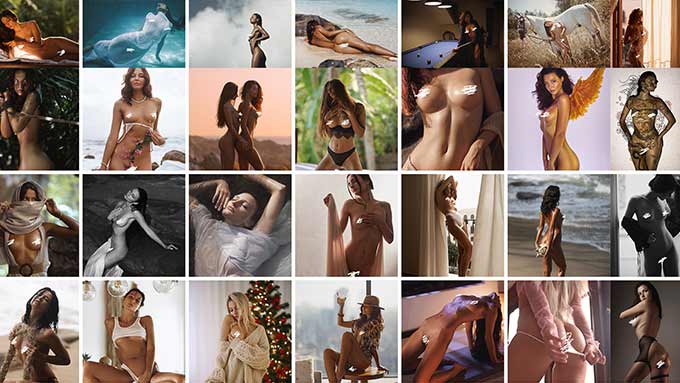
I've rebuilt my portfolio more times than I can count. Every rebuild means removing images I was proud of and accepting that what I thought was my strongest work six months ago now looks like a stepping stone. That process doesn't get easier. Maybe it shouldn't.
The portfolio on this site shows ten images from ten different series. That's the entire argument for two decades of shooting. Ten frames. Choosing them was genuinely painful.
Cutting
The mistake I see constantly: portfolios with a hundred images, every competent frame from every shoot. The photographer's reasoning is always the same. More work equals more proof of skill. It doesn't. It equals less focus, more mediocrity, and a viewer whose attention dissolved twenty images ago.
A gallery director once looked at a sixty-image portfolio I'd brought and said, "There are fifteen good photographs in here and forty-five reasons not to trust your judgment." Difficult to hear. She was completely right.
Your portfolio should argue for what you'll do next, not catalogue everything you've already done. Without a point of view, it's just a hard drive with a nice website around it.
How I select: dump every candidate into a Lightroom Classic collection, usually fifty or sixty frames from recent series. Then start cutting. First pass, remove anything that needs a caption to work. If a viewer can't feel the image without knowing it was shot at dawn on a volcano, it doesn't belong. Second pass, eliminate redundancy. Two images making the same point? Only the stronger one survives. Third pass, evaluate what's left as a set. Does it show range? Tonal variety? If I've got eight golden-hour shots and two studio frames, the portfolio is misrepresenting my work.
By the end I'm usually down to fifteen or twenty. For the web portfolio, I cut to ten.
Sequencing
The order matters nearly as much as the selection. A portfolio is a visual experience with a beginning, middle, and end. The viewer doesn't consciously register this but they feel whether the sequence holds their attention or lets it drift.
Open with something that sets the tone without being your absolute strongest piece. You don't lead with your best; you build toward it. The second and third images should establish range, proving the first wasn't a fluke. The strongest work belongs in the middle third. The closing image should leave a feeling, something quiet, something that makes the viewer sit with it for a moment before clicking away.
Never place two visually similar images next to each other. Alternate tight and wide compositions. Warm palettes then cool. High energy then low. The rhythm keeps the viewer engaged the same way good album sequencing does: you don't put three slow songs in a row.
Presentation Pitfalls
Bad presentation sinks good photographs faster than almost anything else.
White backgrounds are better than black for web portfolios. I resisted this for years because my work is dark and moody, and black felt right. But most monitors display images surrounded by white or light grey UI elements. A black background makes the page feel disconnected, and worse, it can make shadow detail in the images disappear. I eventually switched and the work looked better for it.
Consistent sizing matters. If some images are tiny and others fill the screen, the viewer's eye has to constantly readjust, which pulls attention from the work itself. I display every portfolio image at the same maximum width and let aspect ratio vary naturally.
No watermarks on portfolio work. Theft anxiety is real, but a watermark across a fine art nude says "I don't trust the people looking at my work." That's not the message you want to send a gallery director or collector. If someone wants to steal a 72dpi web image, a watermark won't stop them and the loss isn't worth worrying about.
And please, no auto-playing music. I shouldn't need to mention this but I've encountered it on otherwise excellent photography sites more than once.